When temperatures drop, the air inside your 2005 Toyota Tucson's tires contracts and that means your tire pressure drops too. Driving on underinflated tires in cold weather affects braking distance, fuel economy, and how your Tucson handles on icy or wet roads. Getting your tire pressure right for winter isn't just about comfort. It's about staying safe every time you pull out of the driveway.
What Happens to Tire Pressure When It Gets Cold?
For every 10°F drop in ambient temperature, tire pressure decreases by about 1 PSI (pound per square inch). If you set your tires to the recommended pressure during a warm fall afternoon and a winter cold snap hits overnight, you could wake up to tires that are 3–6 PSI below where they should be. That might not sound like much, but it's enough to change how your 2005 Tucson grips the road, especially in snow or on black ice.
The 2005 Toyota Tucson's recommended tire pressure is 30 PSI for both front and rear tires under normal conditions. This number is listed on the driver's side door jamb sticker and in your owner's manual. For winter driving, some owners and mechanics suggest adding 1–3 PSI above the recommended level to account for the natural pressure drop caused by cold temperatures.
How Do I Check and Adjust My 2005 Tucson's Tire Pressure in Winter?
Checking your tire pressure in winter takes a few minutes and requires a simple tire pressure gauge either a stick gauge or a digital one. Here's how to do it right:
- Check tires when cold. Measure pressure in the morning before driving, or after the car has sat for at least three hours. Driving heats the tires and gives you a false, higher reading.
- Remove the valve cap and press the gauge firmly onto the valve stem. Read the measurement.
- Compare to the recommended PSI. For the 2005 Tucson, that's 30 PSI on the door jamb sticker. In winter, aim for 31–33 PSI to compensate for cold-weather pressure loss.
- Add air if needed. Use a portable air compressor or visit a gas station with an air pump. Fill to your target PSI, checking with the gauge after each short burst.
- Check all four tires and the spare. Don't skip the spare a flat spare when you need it most is a frustrating problem.
Make sure to also keep an eye on your tire pressure monitoring system (TPMS). If the light comes on during cold mornings, that's often a direct result of pressure loss from temperature drops, not a tire puncture. You can learn more about how the Tucson's TPMS works and when it needs calibration.
Should I Use a Different Tire Pressure for Winter Tires vs. All-Season Tires?
If you've switched to dedicated winter tires for the 2005 Tucson, the pressure recommendation stays the same 30 PSI baseline, adjusted up slightly for cold weather. Winter tires have a different tread compound and pattern designed for cold grip, but the inflation pressure follows the same rules. Always check the tire sidewall for the tire's maximum PSI rating and stay well below it. The door jamb recommendation, not the tire sidewall number, is your target.
For owners who haven't replaced their tires yet and are wondering about sizing options, our tire size and replacement options guide for the Tucson covers what fits your 2005 model.
What Are the Most Common Mistakes With Winter Tire Pressure?
- Checking pressure after driving. Warm tires read 2–4 PSI higher than cold tires. If you check after a commute and they read 32 PSI, your actual cold pressure might be 28–29 PSI too low.
- Trusting the TPMS to warn you immediately. The TPMS light typically triggers when pressure drops 25% below the recommended level. By then, your tires are already significantly underinflated.
- Using the PSI number printed on the tire sidewall. That number is the tire's maximum pressure, not the recommended operating pressure for your vehicle. Overinflating to that level makes the ride harsh and reduces traction.
- Setting pressure once and forgetting it. In winter, you should check at least every two weeks, or any time there's a sharp temperature swing. A sudden cold front can drop your pressure overnight.
- Ignoring the spare tire. The compact spare on the 2005 Tucson should be at 60 PSI. Check it once a month.
Does Adjusting Tire Pressure Really Make a Difference in Winter?
Yes. Properly inflated tires maintain a consistent contact patch with the road. Underinflated tires flex more, which builds excess heat, wears the outer edges of the tread faster, and reduces your ability to steer and brake effectively. On a snowy or icy road, that difference can be the length of a car at a stoplight or more.
On the fuel economy side, the U.S. Department of Energy notes that tires underinflated by just 1 PSI can reduce fuel efficiency by about 0.2%. Over a full tank in winter, with prices where they are, that adds up.
For those who do a lot of highway driving in winter, slightly higher pressure within the safe range can also improve stability. Our article on recommended tire pressure for the Tucson on highway drives covers that in more detail.
What Tools Do I Need to Maintain Tire Pressure Through Winter?
You don't need anything expensive. Here's what works:
- A reliable tire pressure gauge. Digital gauges are easy to read and accurate. Look for one rated to ±1 PSI. Styles and readability vary if you prefer a clean, modern display, fonts like Poppins are often used in gauge interface design for their clarity at small sizes.
- A portable 12V air compressor. These plug into your car's cigarette lighter outlet and cost $25–$50. Having one in the trunk means you can top off pressure anywhere without hunting for a gas station pump.
- Valve stem caps. Always keep them on. They're a backup seal that keeps dirt and moisture out of the valve core.
Quick Winter Tire Pressure Checklist for Your 2005 Toyota Tucson
- Check tire pressure every two weeks during winter, always on cold tires.
- Target 31–33 PSI (front and rear) to account for cold-weather pressure loss.
- Don't exceed the tire's maximum PSI listed on the sidewall.
- Reset or monitor your TPMS after adjusting pressure.
- Check the compact spare tire monthly (target: 60 PSI).
- Inspect tires visually for uneven wear, cracks, or low tread depth.
- Keep a digital gauge and portable compressor in your vehicle.
Start with a pressure check this week. Park outside overnight, measure in the morning, and adjust to 31–33 PSI. It takes five minutes and makes every winter drive safer.
 Recommended Tire Pressure for 2005 Hyundai Tucson Highway Driving Guide
 Toyota Tucson Tire Pressure Monitoring System Calibration Guide and Tips
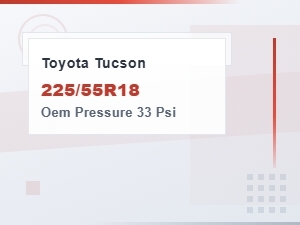 Toyota Tucson Oem Tire Size and Pressure Specifications Guide
 Tire Size and Pressure Recommendations for Tucson
 Recommended Tire Pressure for Stock 2005 Toyota Tucson 16 Inch Wheels
 Toyota Tucson Tire Sizes: Stock vs Aftermarket Comparison