Your Toyota Tucson's tire pressure monitoring system (TPMS) is a safety feature that many drivers overlook until the dashboard warning light turns on. Proper calibration of this system ensures you get accurate tire pressure readings every time you drive. When the TPMS is miscalibrated, you might ignore a real low-pressure warning or chase a false alarm that doesn't exist. Either way, it puts your safety and your tires at risk. Understanding how to calibrate your Toyota Tucson tire pressure monitoring system correctly saves you money on premature tire wear, improves fuel economy, and keeps you safe on the road.
What Does TPMS Calibration Actually Mean for Your Toyota Tucson?
TPMS calibration is the process of teaching your vehicle's computer to recognize the correct baseline tire pressure for all four tires. Once calibrated, the system can detect when pressure drops below or rises above that set point and alert you through the dashboard light.
On the Toyota Tucson, the TPMS uses sensors mounted inside each wheel to measure pressure in real time. Calibration tells the system, "This is what normal looks like." Without it, the system has no reference point, and your readings become unreliable.
For the correct baseline numbers, you can check the OEM tire size and pressure specifications for your Toyota Tucson. These values come from the manufacturer and should always be your starting point.
When Does Your Toyota Tucson Need TPMS Recalibration?
You don't need to calibrate the TPMS every day, but certain situations require it:
- After rotating your tires. Swapping front and rear tires changes which sensor is in which position. The system needs to learn the new layout.
- After replacing one or more tires. New tires may have different sensors, or the pressure in the new tire may differ from what the system expects.
- After changing tire size. If you switch to a different tire size, the recommended pressure changes too. The TPMS needs to know the new target.
- Seasonal temperature swings. A sudden drop in temperature can lower tire pressure by 1–2 PSI per 10°F change. If your system was calibrated in summer, winter readings may be off.
- After replacing a TPMS sensor. New sensors must be registered with the vehicle's computer before the system works correctly.
- When the TPMS light stays on after inflating tires. If you've added air and the warning light won't turn off, the system likely needs recalibration rather than more air.
How Do You Calibrate the TPMS on a Toyota Tucson?
The exact steps depend on your Tucson's model year, but here's the general process:
- Check and adjust all tires to the correct pressure. Use a reliable gauge and inflate each tire to the number printed on the driver's side door jamb sticker. Avoid using the number on the tire sidewall that's the maximum pressure, not the recommended pressure. For highway-specific guidance, see these highway driving tire pressure recommendations for the Tucson.
- Turn the ignition to the "ON" position. You don't need to start the engine, just power up the electronics.
- Locate the TPMS reset button. On most Tucson models, it's under the steering column or on the lower dashboard. Check your owner's manual if you can't find it.
- Press and hold the reset button. Hold it until the TPMS light on the dashboard blinks three times, then release. This tells the system to start the recalibration process.
- Start the engine and drive. The system needs about 20–30 minutes of driving at speeds above 30 mph to complete calibration. During this time, sensors are reading and recording the new baseline pressures.
- Verify the TPMS light turns off. If the light stays on after driving, repeat the process. Persistent issues may point to a faulty sensor.
What About Newer Tucson Models with Auto-Calibration?
Some newer Toyota Tucson models come with an automatic TPMS calibration feature. These systems recalibrate themselves after you adjust tire pressure and drive for a short period. Even so, you may still need to manually trigger a reset through the infotainment screen under the vehicle settings menu if the warning light persists.
What Happens If You Skip TPMS Calibration?
Ignoring TPMS calibration leads to several problems:
- False sense of security. You might think your tires are fine when they're actually underinflated by 5–10 PSI, which increases the risk of a blowout.
- Reduced fuel efficiency. Underinflated tires create more rolling resistance. The U.S. Department of Energy estimates that properly inflated tires can improve gas mileage by up to 3%.
- Uneven tire wear. Tires running at incorrect pressure wear faster on the edges or in the center, cutting their lifespan short.
- Failed state inspection. In many states, a TPMS warning light that stays on is enough to fail a vehicle safety inspection.
- Longer braking distances. Underinflated tires flex more, which reduces grip and increases stopping distance on wet or dry roads.
What Are the Most Common Mistakes During TPMS Calibration?
Even experienced DIYers make errors when working with TPMS. Here are the most frequent ones:
- Setting pressure based on the tire sidewall number. The number on the tire is the maximum cold pressure the tire can handle. Your Toyota Tucson's recommended pressure is usually much lower. Always use the door jamb sticker or the proper calibration and pressure recommendations for your model.
- Calibrating when tires are hot. Heat from driving raises tire pressure by 4–6 PSI. Always check and set pressure when tires are cold meaning the vehicle has been parked for at least three hours or driven less than one mile.
- Forgetting the spare tire. Some Tucson models include a TPMS sensor in the spare. If you swap in the spare and don't register it, the system will throw an error.
- Resetting the system without correcting pressure first. Pressing the reset button doesn't fix low pressure. You must inflate tires to the correct PSI before triggering a recalibration.
- Assuming the TPMS replaces manual checks. TPMS sensors only alert you when pressure drops about 25% below the recommended level. That means your tires can be significantly underinflated before the light comes on. Manual checks with a gauge every month remain important.
How Can You Tell If Your TPMS Sensor Is Broken?
Sometimes the problem isn't calibration it's a failed sensor. Here are signs that point to sensor failure:
- The TPMS light flashes for 60–90 seconds when you start the car, then stays solid. A steady light usually means low pressure. A flashing light indicates a sensor communication problem.
- The system shows "--" or no reading for one or more tires.
- You've replaced a tire recently and the new sensor isn't being recognized.
- The TPMS light stays on even after confirming all tires are at the correct pressure and completing the reset procedure.
TPMS sensors typically last 5–10 years, depending on the battery inside. Most sensor batteries are sealed and not replaceable the whole sensor unit needs swapping when the battery dies.
Useful Tips for Keeping Your TPMS Accurate Year-Round
- Check tire pressure monthly. Don't rely only on the TPMS light. A quality digital gauge costs under $15 and gives you a precise reading every time.
- Recalibrate after every tire rotation. Make it part of your rotation routine so you never forget.
- Replace all four sensors at the same time. If one sensor fails, the others are likely near the end of their life too. Replacing them as a set saves you repeat trips to the shop.
- Keep a record of your sensor IDs. If you write down each sensor's ID number (printed on the sensor body), reprogramming after replacement is faster and cheaper. You can label your records clearly some owners use a neat font like Montserrat to print organized maintenance tags for their glove box.
- Don't use tire sealant without telling your mechanic. Sealants like Fix-a-Flat can gum up TPMS sensors. If you use it in an emergency, let the tire shop know so they can clean or replace the sensor.
Your Next Step: A Quick TPMS Calibration Checklist
Before you start the calibration process, run through this quick checklist:
- Verify your Toyota Tucson's model year and find the correct recommended tire pressure (check the driver's door jamb or your owner's manual).
- Use a calibrated digital gauge to check all four tires while cold.
- Inflate or deflate each tire to match the recommended PSI exactly.
- Locate your TPMS reset button and confirm the reset procedure for your model year.
- Hold the reset button until the TPMS light blinks, then drive for at least 20 minutes above 30 mph.
- Confirm the TPMS light turns off. If it doesn't, repeat once. If it still stays on, have the sensors tested for battery failure or damage.
Keep a monthly reminder to check pressure manually, and treat TPMS calibration as part of your regular maintenance just like oil changes and brake checks. A properly calibrated system gives you real peace of mind every time you get behind the wheel.
 Recommended Tire Pressure for 2005 Hyundai Tucson Highway Driving Guide
 Toyota Tucson Winter Tire Pressure Guide and Tips
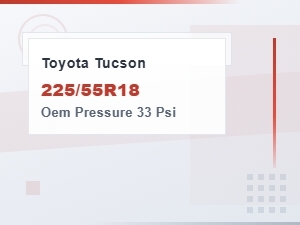 Toyota Tucson Oem Tire Size and Pressure Specifications Guide
 Tire Size and Pressure Recommendations for Tucson
 Recommended Tire Pressure for Stock 2005 Toyota Tucson 16 Inch Wheels
 Toyota Tucson Tire Sizes: Stock vs Aftermarket Comparison